ISO 9001 Certification in UAE: A Complete Guide for Businesses in 2026
Introduction
In today’s competitive business environment, organizations in the UAE are expected to deliver consistent quality, exceptional customer service, and operational excellence. Whether you are a startup, SME, manufacturer, healthcare provider, construction company, or service organization, implementing a Quality Management System (QMS) has become a strategic advantage.
ISO 9001 Certification is the world’s most recognized quality management standard. It helps organizations improve efficiency, strengthen customer confidence, reduce operational risks, and demonstrate a commitment to continual improvement.
This guide explains everything you need to know about ISO 9001 Certification in the UAE, including its benefits, implementation process, costs, and why businesses choose ISO 9001 to stay competitive.
What is ISO 9001 Certification?
ISO 9001 is an internationally recognized standard developed by the International Organization for Standardization (ISO). It provides a framework for establishing, implementing, maintaining, and continually improving a Quality Management System (QMS).
Rather than focusing solely on products, ISO 9001 emphasizes improving business processes to ensure organizations consistently meet customer expectations and regulatory requirements.
The latest version, ISO 9001:2015, follows a risk-based approach that encourages organizations to identify opportunities, manage risks, and continuously improve performance.
What is ISO 9001 Certification?
Every successful business depends on efficient processes and satisfied customers. ISO 9001 helps organizations create structured systems that improve performance across every department.
With ISO 9001, businesses can:
- Improve customer satisfaction
- Deliver consistent product and service quality
- Minimize operational errors
- Increase employee productivity
- Reduce unnecessary costs
- Strengthen brand reputation
- Win more contracts and tenders
- Expand into international markets
Key Principles of ISO 9001
The ISO 9001 standard is built on several quality management principles:
Customer Focus
Understanding customer needs and consistently exceeding expectations.
Leadership
Strong leadership that establishes clear business objectives and promotes quality throughout the organization.
Engagement of People
Empowering employees to contribute toward organizational success.
Process Approach
Managing activities as interconnected processes for greater efficiency.
Continuous Improvement
Regularly evaluating and improving business performance.
Evidence-Based Decision Making
Making informed decisions using accurate data and measurable results.
Relationship Management
Building strong relationships with suppliers, partners, and stakeholders.
Benefits of ISO 9001 Certification
Organizations certified to ISO 9001 enjoy numerous advantages:
Increased Customer Trust
Customers prefer working with businesses that follow internationally recognized quality standards.
Improved Operational Efficiency
Documented processes reduce waste, improve workflow, and eliminate unnecessary activities.
Better Risk Management
ISO 9001 encourages businesses to identify risks early and implement preventive actions before problems occur.
Competitive Advantage
Many government tenders and corporate clients require ISO certification when selecting suppliers.
Employee Engagement
Clearly defined responsibilities improve teamwork, accountability, and employee satisfaction.
International Recognition
ISO 9001 is accepted worldwide, making it easier to enter new markets and attract global customers.
Which Businesses Should Get ISO 9001 Certification?
ISO 9001 is suitable for organizations of every size and industry.
Common sectors include:
- Manufacturing
- Construction
- Engineering
- Healthcare
- Education
- Logistics
- Hospitality
- Retail
- Information Technology
- Food Industry
- Government Contractors
- Professional Services
- Startups and SMEs
ISO 9001 Certification Process
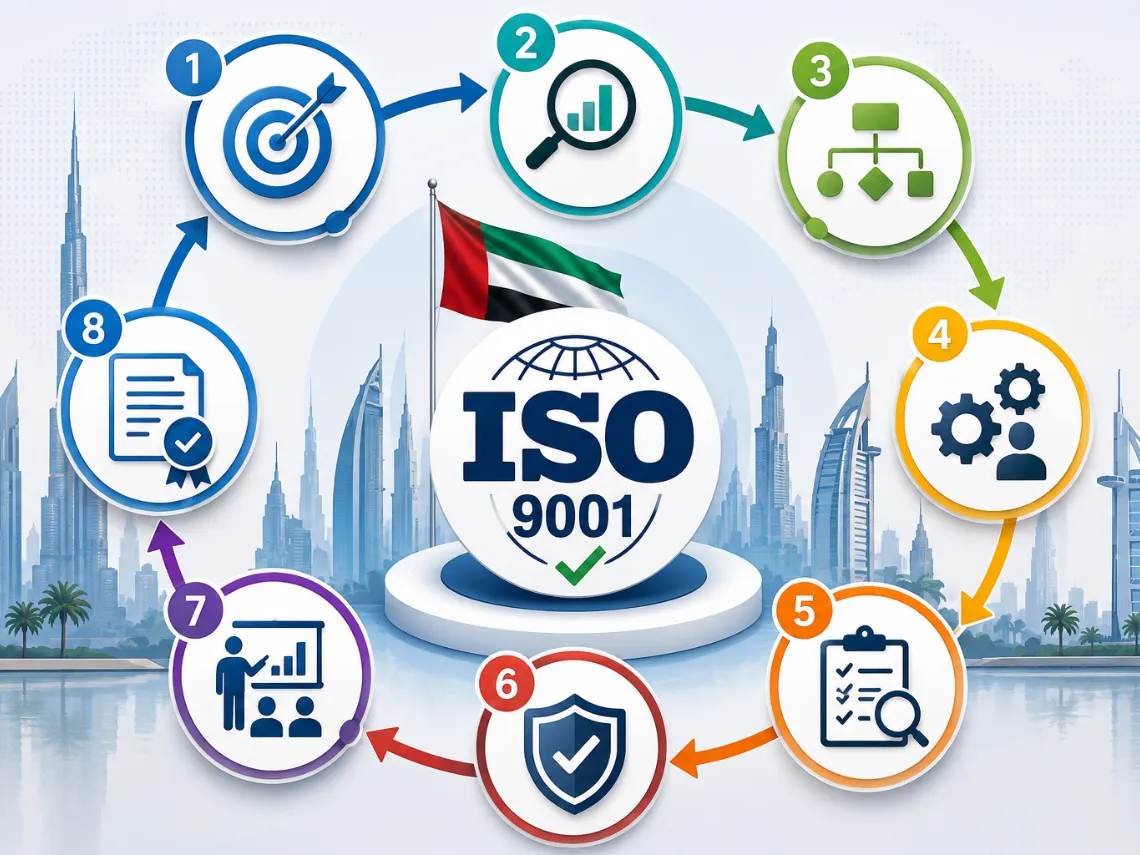
Obtaining ISO 9001 Certification typically involves the following steps:
Step 1: Initial Consultation
A certification consultant evaluates your organization and identifies your business objectives.
Step 2: Gap Analysis
Current processes are reviewed against ISO 9001 requirements to identify improvement areas.
Step 3: Documentation
Quality manuals, procedures, policies, work instructions, and operational records are prepared.
Step 4: Implementation
The Quality Management System is implemented across the organization.
Step 5: Internal Audit
An internal audit ensures the management system complies with ISO 9001 requirements.
Step 6: Management Review
Top management reviews the system’s performance and approves readiness for certification.
Step 7: Certification Audit
An accredited certification body conducts the external audit.
Step 8: Certification
Upon successful completion, the organization receives its ISO 9001 Certificate.
Documents Required for ISO 9001
Typical documentation includes:
- Quality Policy
- Quality Objectives
- Organization Structure
- Risk Assessment
- Standard Operating Procedures
- Process Flow Charts
- Internal Audit Reports
- Corrective Action Records
- Training Records
- Management Review Minutes
How Long Does ISO 9001 Certification Take?
The certification timeline depends on the size and complexity of the organization.
Generally:
- Small Businesses: 2–4 weeks
- Medium Businesses: 4–8 weeks
- Large Organizations: 6–12 weeks
Is ISO 9001 Mandatory in UAE?
No.
ISO 9001 Certification is voluntary; however, many government authorities, multinational companies, and private sector clients require suppliers to hold ISO certification before awarding contracts.
Why Choose Professional ISO Consultants?
Working with experienced consultants offers several advantages:
- Faster implementation
- Accurate documentation
- Reduced audit findings
- Expert guidance
- Cost-effective certification
- Higher success rates
- Ongoing compliance support
Professional consultants help organizations avoid common mistakes while ensuring a smooth certification process.
Frequently Asked Questions
Is ISO 9001 valid internationally?
Yes. ISO 9001 is recognized in more than 170 countries.
Can small businesses get ISO 9001 Certification?
Absolutely. The standard is designed for organizations of every size.
How long is the certificate valid?
ISO 9001 Certification is generally valid for three years, with annual surveillance audits.
Does ISO 9001 improve business performance?
Yes. Organizations often experience better efficiency, fewer errors, improved customer satisfaction, and stronger operational control after implementation.
Final Thoughts
ISO 9001 Certification is more than a compliance requirement—it is a strategic investment in your organization’s future. By implementing an effective Quality Management System, businesses can improve operational efficiency, strengthen customer confidence, reduce risks, and position themselves for long-term growth.
Whether you are a startup, SME, or established enterprise in the UAE, achieving ISO 9001 Certification demonstrates your commitment to quality and continuous improvement. Partnering with experienced certification consultants ensures a smooth implementation process and helps your organization achieve certification efficiently while maximizing the long-term benefits.
Need ISO 9001 Certification in the UAE?
Our experts provide complete ISO 9001 consultancy, including gap analysis, documentation, implementation, internal audits, certification support, and post-certification guidance. Contact us today for a free consultation and begin your journey toward internationally recognized quality standards.